
It Is Time to Retire Debates
Last year, I listened to a man speak who claimed to be an evangelist. However, I clearly grew to have a level of disdain for him. He spoke fondly of public debates not only with those who opposed Christianity, but also with his fellow Christians who opposed (or simply respectfully disagreed with) Catholicism. Make no mistake, I am a Catholic, but I am a convert and try hard to respect my fellow Christians (though I have failed in the past). This man spoke of numerous occasions where he intentionally began a conversation in a way where "they cannot win" and he appeared to relish in making others look and feel foolish. I found the speech he gave so distasteful that it made me reconsider my entire stance on debate. This charlatan began the formation on my thoughts on debate being nothing more than smoke and mirrors.
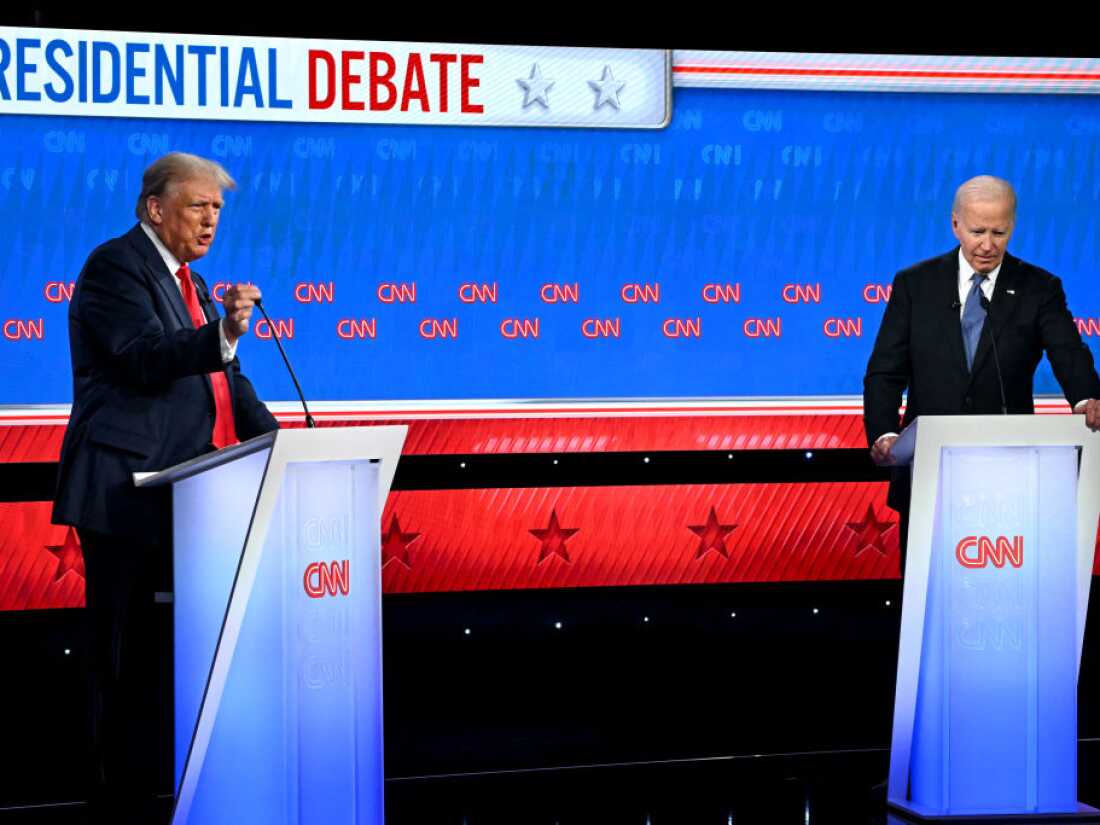
Debates in U.S. politics are now terribly strange to me. The average Presidential Debate lasts for approximately 90 minutes and has drawn up to 73.1 million viewers with the 2020 debate between Donald Trump and Joe Biden holding the current record. The reason I find these debates so strange is that I do not comprehend their purpose. I believe the reason the 2020 debate captivated such an audience was largely out of the potential for a shock factor. I find a significant proportion of the viewers tuned in to see what outlandish one-liners Trump would sling, and what globally embarrassing gaffs Joe Biden would make. The other part of the viewership, I believe, tuned in to yell at their TV or to mock their candidate's opponent.
Throughout U.S. history, political debates have been exceptionally rare. Debates were nearly non-existent for nearly the first 200 years of our nation's history. One noteworthy exception was the Illinois U.S. Senate Campaign of Abraham Lincoln versus Stephen A. Douglas. However, this debate was a formal seven-part series regarding the future of slavery in the United States. There were a few debates after the invention and popularization of the radio, but not many. Most known, due to their popular inclusion in K-12 school textbooks (everything children read and learn in school is controlled by maybe 10 people on this earth) is the JFK and Nixon debate where Nixon is famously not as composed as JFK. I do not feel a ton of sympathy for Richard Nixon, and generally regard him as a bad person, but for students to only know about you being sweaty on TV, and then your scandal and subsequent impeachment is a wild legacy to have. After this debate, there was not another debate televised for 16 years, but unfortunately, in 1976, televised debates returned.
In the year 1988, the Commission on Presidential Debates was established with support from both Republicans and Democrats. The CPD is not a government organization, it is a non-profit which relies entirely on donations from corporations and individuals making it susceptible to outside influence. This also means that CPD has no formal way to enforce rules and regulations and in 2024, Donald Trump and Joe Biden agreed (for the first and only time) to bypass the CPD and host their own series of two debates. CPD wished for there to be only one 90-minute debate per their norm. CPD has been sued several times over their longstanding rule that an individual must poll at 15% or higher to be involved in the debates. I do believe this rule goes against the initial spirit of public political debates set by Abraham Lincoln as despite losing his debates and ultimately losing the election, the notoriety he gained allowed him to be propelled into the office of the President of the United States a short time later.
Now, let's talk effectiveness because after all, why would we host debates if they don't matter? In the year 1960, over half of voters polled stated they were influenced by the hosted debates. This was also the year of Kennedy versus Nixon proving just how important displaying confidence, composure, and a strong look mattered to the voters at this point in history. This still matters today to an extent. Politicians still wear suits and ties to convey professionalism, success, and seriousness. They are still judged based on how they react to high-stress situations, and it still matters whether a politician will sweat or slur their words under the bright stage lights. However, I would argue that Americans in the year 1960 were significantly less polarized along political hardlines than they are today. The anti-war movement and counterculture were significant issues during that time, but JFK was far from socially liberal (in his political views maybe not when he was on his yacht). Compared to that over 50% figure in 1960, today, data shows that only 3-10% of voters are influenced by debates. Whether or not a 3-10% figure matters to sway an election is far too complex of a math problem and we have far too little data to determine that because of the electoral college. However, I would bet the house (if the bank didn't own most of it) that if there were no presidential debates, the outcome would remain the same.
Effectiveness of influence is not my biggest critique of debates. I find debates as a forum to measure a candidate to be deeply flawed. A president or other political leader is surrounded by a significant number of subject matter experts on nearly every field you could think of. The President has a consistent entourage of Generals and three letter agency heads who are informed by thousands of analysts working around the clock. The President hires a cabinet to oversee various aspects of governance, and the President manages these cabinet members at an incredibly high level only weighing in on the most serious of issues after being fed copious amounts of information and reporting. I do not find it relevant that a political candidate is able to produce a sound byte about how they would handle a specific situation. I care far more about a candidate's ability to select a competent staff of experts around them and analyze the work they are doing, acting diligently based on complex considerations and ample thoughts. I find almost zero value in how they respond to a question they have mere seconds to consider. You could argue that they've had a lot of time to do their research and prepare their answers, but I still find this to be a wildly flawed format to judge a person.
I would much rather see a candidate bring their team, be given a complex question, and work with that team to develop a strategy to answer the question and develop an outline of how they would address that problem. The reason that will never happen is that it wouldn't be popular on television and it wouldn't produce an abundance of great clips to post on social media. The only value I can extract from continuing to hold political debates is to encourage voters to get to the polls. Making the debate a big event encourages people tuning in. Citizens know that their friends will be talking about it, maybe the office will discuss some of the more important or even funnier moments of the debate, and they do not wish to be left out of this. In my opinion, this does increase voter participation and voter turnout. The debates have not in modern history, increased voter awareness on issues nor have they solidified a candidate's beliefs or qualifications. I find the modern presidential debates to be inflammatory in nature, which also means they are likely to increase voter turnout. Unfortunately, politics have become more about adding fuel to the fire to motivate your side than they have been about working together and overcoming our differences to find a viable solution for the American people.
Perhaps I am an idealist, but I find that political candidates are divisive enough apart from each other without yelling and name calling for 90 minutes while 70 million Americans watch and pick a side. I think it is absolutely time to retire political debates and do not find significant enough value in their continued practice to warrant the televised shouting matches between the elderly.